
7 Signs You Might Have Gum Disease
 By Dr. Aman Kalucha
Medically reviewed by Dr. Kalucha, DDS
By Dr. Aman Kalucha
Medically reviewed by Dr. Kalucha, DDS
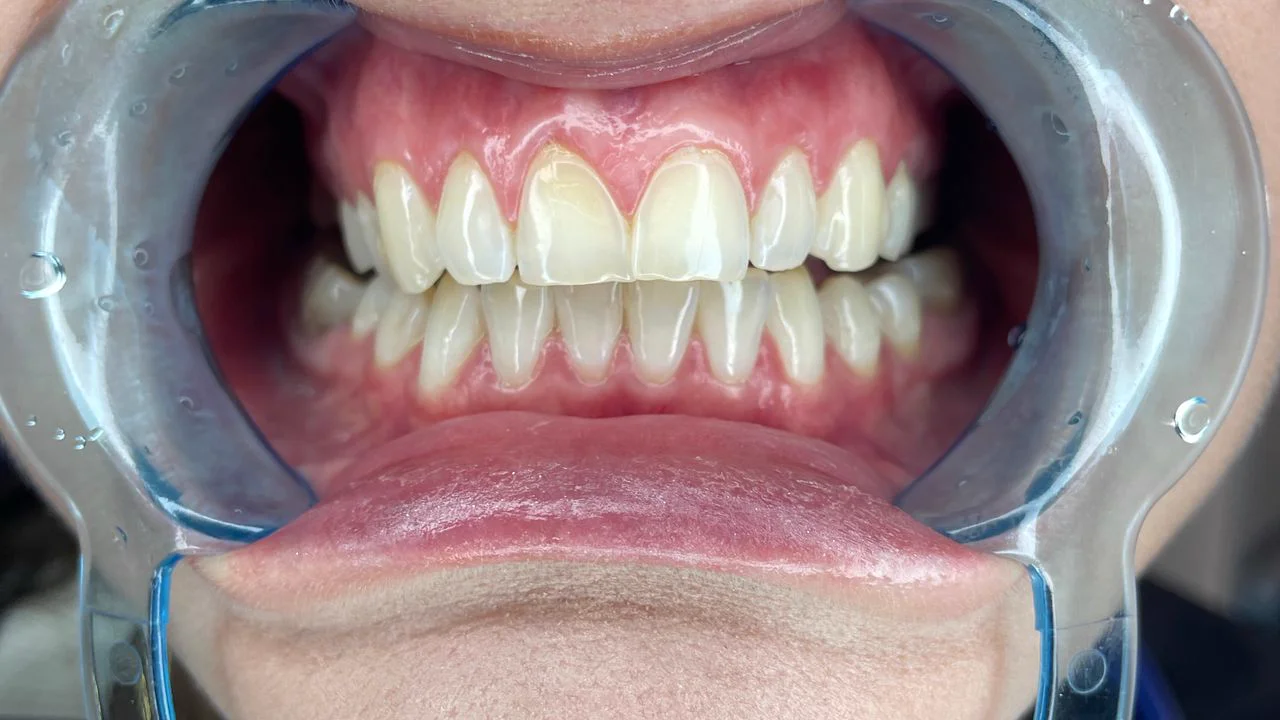
Gum disease is the most common problem I treat that patients have no idea they have. It rarely hurts in the early stages, so a little blood in the sink or bad breath that won’t quit is easy to wave off. By the time a tooth actually aches, the disease has usually moved past the gums and into the bone that anchors your teeth, and unlike gum tissue, that bone does not grow back on its own.
During my General Practice Residency at Dalhousie, I spent an extra hospital year treating advanced periodontal and surgical cases under specialist supervision. The pattern was almost always the same: the warning signs showed up years before the patient walked in. Here are the seven I want you to watch for, why they matter beyond your mouth, and when it’s worth coming in to see me here in West Abbotsford.
1. Your gums bleed when you brush or floss
Healthy gums don’t bleed. If you see pink in the sink or blood on the floss, that’s not proof you brushed too hard. It’s usually the earliest sign of gingivitis, the reversible first stage of gum disease.
Bleeding happens because plaque bacteria along the gumline trigger inflammation, and inflamed tissue tears easily. The good news: caught here, it’s almost always reversible with a professional cleaning and a few tweaks to your home routine. Whatever you do, don’t stop flossing because it bleeds. That’s exactly backwards.
2. Persistent bad breath or a bad taste
Bad breath that returns no matter how often you brush is often coming from below the gumline, not your tongue. The bacteria behind gum disease give off sulphur compounds, and they shelter in pockets between gum and tooth where your toothbrush simply can’t reach.
If mints and mouthwash only buy you an hour or two, the source is likely periodontal. A lingering metallic or “off” taste points the same direction.
3. Red, swollen, or tender gums
Take a look in the mirror. Healthy gums are firm and pale pink; gums in trouble look red, puffy, or shiny, and feel sore when you touch them.
That swelling is your immune system reacting to bacteria it can’t clear alone. Plenty of patients tell me they assumed tender gums were just normal for them. They aren’t. Persistent inflammation is your body flagging that something needs attention.
4. Receding gums or “longer-looking” teeth
If your teeth look longer than they used to, your gums are probably receding. As gum disease advances, the tissue and bone supporting each tooth pull away and expose the root.
Why recession matters
Exposed roots are softer than enamel, so you may notice new sensitivity to hot, cold, or sweet foods. Recession also opens up spaces where more bacteria collect, which speeds the whole process up. This is often the point where gingivitis has crossed into periodontitis, where the damage starts to become permanent.
5. Loose teeth or a shifting bite
Adult teeth should not move. If a tooth feels loose, or your bite suddenly feels different (teeth meeting in a new way, a gap opening up, a partial denture that no longer seats), the bone holding those teeth may be breaking down.
This is advanced periodontitis, and it’s the leading cause of tooth loss in Canadian adults. The sooner you’re seen, the more teeth we can usually save. If a tooth is already lost, options like dental implants can restore function, but keeping your own teeth is always the better outcome.
6. Pus or a salty taste between teeth and gums
Pus around the gumline is a clear sign of active infection and shouldn’t wait. You might see it, taste something salty or metallic, or notice a small bump on the gum that looks like a pimple.
That usually points to a periodontal abscess, a trapped pocket of infection that can cause fast, localized bone loss. If you also have facial swelling, fever, or real pain, treat it as urgent: call us or head to emergency dentistry the same day.
7. Changes you can’t see, and why your whole body cares
Here’s the part most people miss: gum disease isn’t only a mouth problem. The chronic inflammation and bacteria don’t stay put.
A large body of research links periodontitis to higher risks of heart disease, harder-to-control blood sugar in people with diabetes, and pregnancy complications such as low birth weight. The diabetes link runs both ways: gum disease makes blood sugar tougher to manage, and high blood sugar makes gum disease worse. That two-way street is exactly why I ask about your general health and medications when I see periodontal signs. Taking care of your gums is part of taking care of the rest of you.
When you should come in
Book an exam if any of these signs has stuck around more than a week or two, especially bleeding, breath that won’t clear, or visible recession. You don’t need to wait for pain to justify the visit.
When you come in, I measure the depth of the pocket around each tooth with a small probe. Anything over about three millimetres tells me bacteria are getting under the gum, and that single number guides everything that follows. I check for bone loss on X-rays, then tell you plainly which stage you’re at. Early gingivitis often needs nothing more than a thorough cleaning and some coaching on technique. More advanced cases may need scaling and root planing (a deeper clean below the gumline) plus a tighter maintenance schedule. You can read how we approach all of this on our gum disease treatment page.
What it costs
In the BC market, a standard cleaning and exam typically runs around $200 to $400 , while scaling and root planing for active periodontitis is usually billed by quadrant and may total roughly $400 to $1,000 depending on how much work is involved. You’ll always get a written estimate after your exam, before any treatment begins. If you carry coverage, periodontal care is often partly paid, and many Abbotsford and Fraser Valley patients now qualify for help through the Canadian Dental Care Plan.
Gum disease is far easier to treat the earlier we catch it. If something on this list sounds familiar, call 604-856-7860 or book an exam. I’m glad to take a look.