
Kids & Pediatric Dentistry in Abbotsford, BC
Family-friendly dental care for kids in West Abbotsford: first visits, prevention, and the habits that keep your child cavity-free for life.
Quick answers
Medically reviewed by Dr. Kalucha, DDSWhen should my child first see a dentist?
Bring your child in by their first birthday, or within six months of the first tooth appearing, whichever comes first. The Canadian Dental Association recommends this early visit because it catches problems before they start and gets your child comfortable in the chair while everything is still healthy. Even if those first teeth look perfect, an early check builds the habit and lets Dr. Kalucha guide you on feeding, brushing, and what to expect next.
How much does a child's dental visit cost in Abbotsford?
A child's exam, cleaning, and fluoride typically runs around $150 to $250 in the Abbotsford area, depending on whether X-rays are needed. Many children are now fully covered under the Canadian Dental Care Plan, and most private insurance plans cover routine kids' visits. You get a written estimate before any treatment beyond the checkup, so there are no surprises.
Does the Canadian Dental Care Plan (CDCP) cover my kids?
Yes, children under 18 in eligible families are covered by the CDCP for exams, cleanings, fluoride, fillings, and more. Coverage depends on your adjusted family net income, and the plan may cover the full cost or leave a small co-pay. The team helps you understand what your child qualifies for and bills the plan directly where possible.
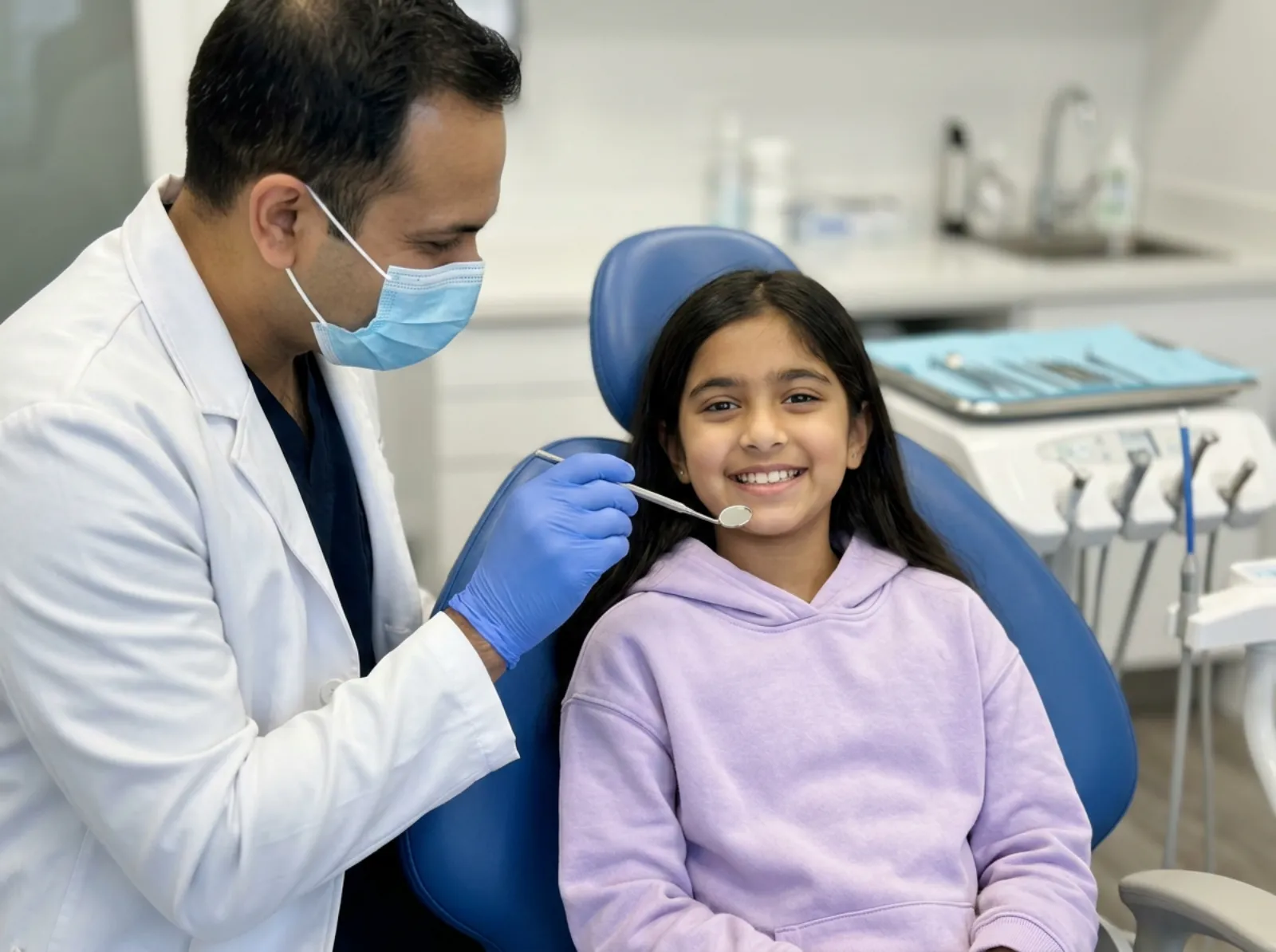
The first dental visit shapes how your child feels about the dentist for years to come. Get it right (early, unhurried, and positive), and brushing, flossing, and checkups become things your child simply does, not battles you fight. At Mount Lehman Dental in West Abbotsford, Dr. Aman Kalucha sees kids from their first tooth through their teenage years, with a focus on prevention and on making the chair a place your child doesn’t dread.
When to bring your child in
The recommendation that surprises most parents is the timing: your child should see a dentist by their first birthday, or within six months of the first tooth coming in, whichever comes first. That’s the guidance from the Canadian Dental Association, and there’s solid reasoning behind it.
An early visit isn’t really about finding problems in a mouth with two or three teeth. It’s about three things: spotting the earliest signs of decay before they need a filling, coaching you on the habits that prevent it, and, just as importantly, letting your child meet the dentist while everything is comfortable and pain-free. A toddler whose first visit is calm and friendly grows into a child who isn’t afraid. A child whose first visit happens at age five because something already hurts often carries that fear for life.
Prevention is the whole game
With kids, the cavities you prevent are far easier than the ones you fix. Two simple, proven tools do most of the heavy lifting.
Fluoride
Fluoride strengthens tooth enamel and helps reverse the very earliest stages of decay before a cavity forms. Your child gets it from toothpaste and often from drinking water, and we apply a concentrated fluoride varnish at checkups, a quick brush-on treatment that soaks into the enamel and protects the teeth for months. It takes seconds, and there’s nothing to swallow or hold in the mouth.
Dental sealants
Most childhood cavities start in the deep grooves of the back molars, where a toothbrush bristle simply can’t reach the bottom. A dental sealant is a thin protective coating painted into those grooves to seal them off. It’s painless, needs no freezing, and takes only a few minutes per tooth. Sealing the permanent molars as they come in (usually around age six and again around twelve) is one of the most effective things you can do to keep your child cavity-free, and it costs a fraction of treating the decay it prevents.
Making the visit a positive one
Children read your tone, and they read ours. We keep early appointments short and low-pressure: a chance to count teeth, take a careful look, and let your child sit in the “magic chair” that goes up and down. We explain instruments in plain, friendly language (the suction is the “tooth vacuum,” the polisher “tickles” the teeth) so nothing arrives as a surprise.
If your child is nervous, that’s normal and we plan for it. We move at their pace, give them choices where we can, and never rush a frightened kid into something. A few things help at home, too: avoid loading the visit with words like “hurt,” “needle,” or “drill,” even to reassure, and frame the dentist as a normal (even fun) part of staying healthy. Reading a picture book about the dentist beforehand works wonders for little ones.
If you deal with your own dental anxiety, you’re not alone, and the best gift you can give your child is a fresh start where the dentist was never something to fear in the first place.
Building habits that last
The goal of children’s dentistry isn’t just healthy baby teeth: it’s an adult who looks after their mouth automatically. That’s built one visit at a time:
- Brushing twice a day with a smear of fluoride toothpaste for toddlers, a pea-sized amount once they can spit. You’ll need to help or supervise until around age seven or eight, when their hand coordination catches up.
- Flossing wherever two teeth touch (even baby teeth), because that’s where the brush can’t reach.
- Smart snacking. Frequent sips of juice, milk, or anything sugary keep the teeth under constant acid attack. Water between meals is your child’s teeth’s best friend.
- Regular checkups every six months, so small issues stay small and fluoride keeps the enamel strong.
We’ll show you and your child the right brushing technique at each visit and adjust the advice as they grow, from a teething baby to a teen who may be a candidate for Invisalign once the adult teeth are in.
Why baby teeth deserve real care
It’s tempting to think baby teeth don’t matter because they fall out anyway. They matter a great deal. Baby teeth hold the space and guide the adult teeth into position, and they let your child chew and speak clearly during the years that count for development. A baby tooth lost early to decay can let neighbouring teeth drift, crowding the permanent tooth that was meant to fill that space, a small problem that becomes a larger orthodontic one.
Care for the whole family, under one roof
Bringing the kids in is easiest when the whole family is seen in one place. Dr. Kalucha completed a hospital-based General Practice Residency at Dalhousie University in Halifax, a competitive extra year most general dentists never do, treating complex restorative, surgical, and root-canal cases under specialist supervision. That depth of training matters for kids in two practical ways: he can recognize when a worrying tooth needs more than a filling, and he can handle a wide range of treatment himself rather than referring your child elsewhere. Your child’s care and your own family dentistry happen together in West Abbotsford, and if a sudden toothache or a knocked-out tooth ever strikes, emergency dental care is part of the same practice.
If cost is a worry, we’ll walk you through your insurance and your child’s CDCP coverage so nothing stands between your kids and a healthy start here in the Fraser Valley.
Ready to book your child’s first visit, or due for a checkup? Give our Mt Lehman Road office a call. We’d love to meet them.
Book kids & pediatric dentistry today
Related services
Family & General Dentistry
One dental home for your whole family: checkups, cleanings, fillings, and everyday care for kids, adults, and grandparents alike.
Dental Anxiety Help
Afraid of the dentist? You're not alone, and you won't be judged here. We slow down, explain everything, and give you control over the pace.
Frequently asked questions
When should my child first see a dentist?
Bring your child in by their first birthday, or within six months of the first tooth appearing, whichever comes first. The Canadian Dental Association recommends this early visit because it catches problems before they start and gets your child comfortable in the chair while everything is still healthy. Even if those first teeth look perfect, an early check builds the habit and lets Dr. Kalucha guide you on feeding, brushing, and what to expect next.
How much does a child's dental visit cost in Abbotsford?
A child's exam, cleaning, and fluoride typically runs around $150 to $250 in the Abbotsford area, depending on whether X-rays are needed. Many children are now fully covered under the Canadian Dental Care Plan, and most private insurance plans cover routine kids' visits. You get a written estimate before any treatment beyond the checkup, so there are no surprises.
Does the Canadian Dental Care Plan (CDCP) cover my kids?
Yes, children under 18 in eligible families are covered by the CDCP for exams, cleanings, fluoride, fillings, and more. Coverage depends on your adjusted family net income, and the plan may cover the full cost or leave a small co-pay. The team helps you understand what your child qualifies for and bills the plan directly where possible.
What if my child is scared of the dentist?
Dental anxiety in kids is completely normal, and we plan for it rather than push through it. We go slowly, explain each step in words a child understands, and let them get familiar with the chair and tools before anything happens. The point of those early visits is partly to make sure one scary first experience never turns into a lifelong fear.
Are dental sealants worth it for kids?
Yes. Sealants are one of the most cost-effective ways to prevent cavities in children. They're a thin protective coating painted onto the chewing surfaces of the back molars, where most childhood decay starts. Applying them is quick, painless, and needs no freezing, and a single sealant can protect a tooth for years.
How often should kids get a dental checkup?
Most children should see the dentist every six months, the same as adults. Regular visits let us catch small cavities while they're easy to treat, monitor how the adult teeth are coming in, and reapply fluoride to strengthen the enamel. Some kids at higher risk of decay benefit from more frequent visits, and we'll tell you if that applies to your child.
Do baby teeth really matter if they fall out anyway?
Yes, baby teeth matter more than most parents realize. They hold space for the adult teeth, guide them into the right position, and let your child chew and speak properly during years that count for development. A baby tooth lost too early to decay can crowd the permanent teeth and lead to bigger orthodontic problems later.
Ready to book your visit?
New patients are welcome at our West Abbotsford office. Call us or request an appointment online, and we’ll find a time that works for you.