How Much Do Dental Implants Cost in Abbotsford, BC?
 By Dr. Aman Kalucha
Medically reviewed by Dr. Kalucha, DDS
By Dr. Aman Kalucha
Medically reviewed by Dr. Kalucha, DDS
If you’ve searched “dental implant cost Abbotsford” and found prices ranging from $1,500 to $6,000 for what sounds like the same thing, you’re not imagining the confusion. The honest answer is that “a dental implant” isn’t one fee: it’s a series of steps, and the quote you get depends entirely on which of those steps your mouth actually needs. I’m Dr. Aman Kalucha, and I place and restore implants here at Mount Lehman Dental in West Abbotsford. Below is the real breakdown, with local Fraser Valley ranges, so you can read any treatment plan and understand exactly what you’re paying for.
What “a dental implant” actually includes
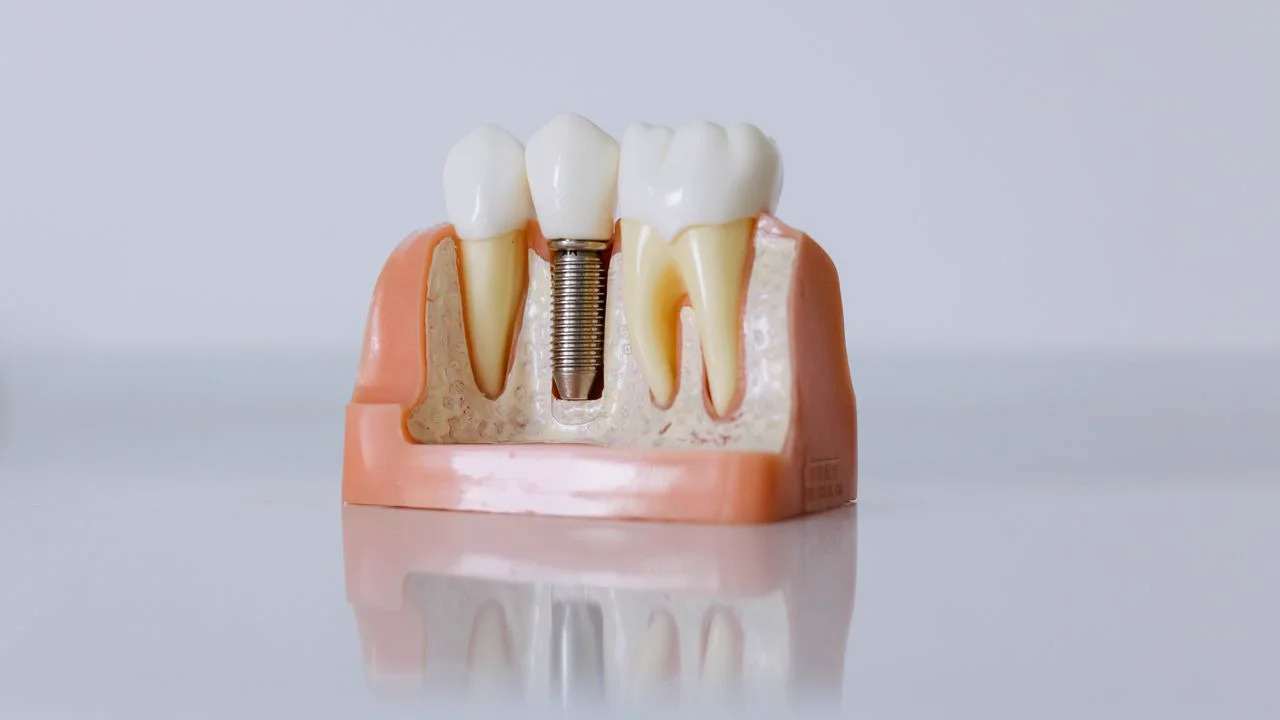
When people say “implant,” they usually picture one tooth. In reality, a single replacement tooth is three separate components, each with its own fee:
- The implant fixture: the titanium post surgically placed in your jawbone. This is the part that fuses to bone and acts as the root.
- The abutment: a small connector piece that attaches to the implant once it has healed.
- The crown: the visible, custom-made tooth that screws or cements onto the abutment.
A quote that looks suspiciously low is often pricing only the fixture, not the abutment and crown you’ll need to actually chew. Always ask whether a number is “all-in” or “surgery only.” That one question explains most of the price gaps you’ll see between offices.
Honest local range for a single implant
In the BC market, a complete single implant (fixture, abutment, and crown) typically runs about $3,500 to $6,000 . The fixture and surgery portion alone is often $1,800 to $3,000 , with the crown adding roughly $1,500 to $2,500 . You’ll get a written estimate after your exam and 3D scan, before any treatment begins, so the number you sign off on is the number you pay.
The add-ons that change your quote
Most of the price difference between two patients comes down to what their mouth needs before the implant can go in. Here are the common ones.
Tooth extraction
If the failing tooth is still in place, it has to come out first. A straightforward extraction adds roughly $200 to $450 ; a surgical extraction (broken roots, impacted teeth) costs more. Sometimes I can place the implant the same day the tooth is removed, which cuts down on visits and healing time, but only when your bone volume and any infection allow it. If they don’t, staging the work over a few months protects the long-term result, and I’ll tell you honestly which path your scan supports.
Bone grafting
This is the big one. An implant needs enough healthy bone to anchor into. If a tooth has been missing for a while, the jaw shrinks where it used to be, which is exactly why replacing a missing tooth matters beyond appearance (more on that in our dental implants overview). A minor graft to preserve a socket might add $400 to $800 ; a larger ridge augmentation or sinus lift can add $1,000 to $2,500 or more . Grafting is also a major reason a “cheap” implant elsewhere can end up costing more. If the foundation isn’t built properly, the implant can fail.
Sedation and imaging
A cone-beam (3D) scan to plan placement precisely is usually included in the surgical fee or billed separately as a modest add-on. Sedation, if you want it, is extra and depends on the type.
Why the cheapest quote rarely wins
I trained to handle complex surgical and restorative cases during my General Practice Residency at Dalhousie (an extra hospital year most general dentists never do), and the lesson that stuck with me is that implant success is decided long before the crown goes on. Cut corners on diagnosis, bone preparation, or component quality, and you risk peri-implantitis, a loose crown, or an implant that has to be removed and redone. A redo is far more expensive and invasive than doing it right the first time.
When you compare quotes, look past the headline number and ask:
- Is the fixture from a reputable, well-documented implant system, or a generic one with limited long-term data and few matching parts down the road?
- Does the fee include the abutment, crown, and follow-up visits?
- Was a 3D scan used to plan placement, or just a flat 2D X-ray?
- Who places the implant, who restores it, and is that coordinated under one roof?
Insurance, CDCP, and financing
Most dental plans treat implants as a “major” service, often covering a percentage up to your annual maximum. Coverage varies widely, so we help you read your plan and submit a pre-determination so you know what’s covered before you commit. The federal Canadian Dental Care Plan (CDCP) has been expanding eligibility; whether it contributes toward implants in your specific situation depends on current program rules, which is why we check it case by case. See our insurance and CDCP page for what to bring.
For the out-of-pocket portion, we can discuss payment arrangements and phasing treatment over time so the cost stays manageable.
Are there lower-cost alternatives?
Sometimes. Depending on the gap, a fixed bridge or a partial denture may cost less upfront, though they don’t preserve jawbone the way an implant does and often need replacing sooner. If you’re replacing several teeth at once, implant-supported solutions can work out more economical per tooth than individual implants. We’ll walk through the trade-offs honestly during your exam rather than steering you toward the most expensive option by default.
What to do next
The only way to get an accurate implant price is an exam and a 3D scan. Anything before that is a ballpark. If you’re weighing your options in West Abbotsford or the wider Fraser Valley, book a consultation and you’ll leave with a clear, written estimate and no pressure to decide on the spot. Call us at 604-856-7860 or request a visit online.
Related services