
Crowns & Bridges in Abbotsford, BC
Custom crowns to rebuild a damaged tooth and bridges to replace a missing one, restoring strength, function, and the way your bite feels.
Quick answers
Medically reviewed by Dr. Kalucha, DDSHow much does a dental crown cost in Abbotsford?
A single crown in the Abbotsford area generally runs from about $1,100 to $1,800, and a three-unit bridge from roughly $2,500 to $4,000. The range depends on the material chosen and whether the tooth first needs a core build-up or root canal. You get a written estimate after your exam, before any work begins.
Does getting a crown hurt?
No, preparing a tooth for a crown is done under local anesthetic, so you shouldn't feel pain during the appointment. Some tenderness or sensitivity to hot and cold is normal for a few days afterward and usually settles on its own. If you feel anxious, Dr. Kalucha can talk through ways to keep you comfortable.
How long do crowns and bridges last?
With good care, most crowns and bridges last 10 to 15 years, and many last longer. Lifespan depends on your bite, your home cleaning, and habits like grinding or chewing ice. Daily brushing and flossing plus regular checkups are what protect them most.
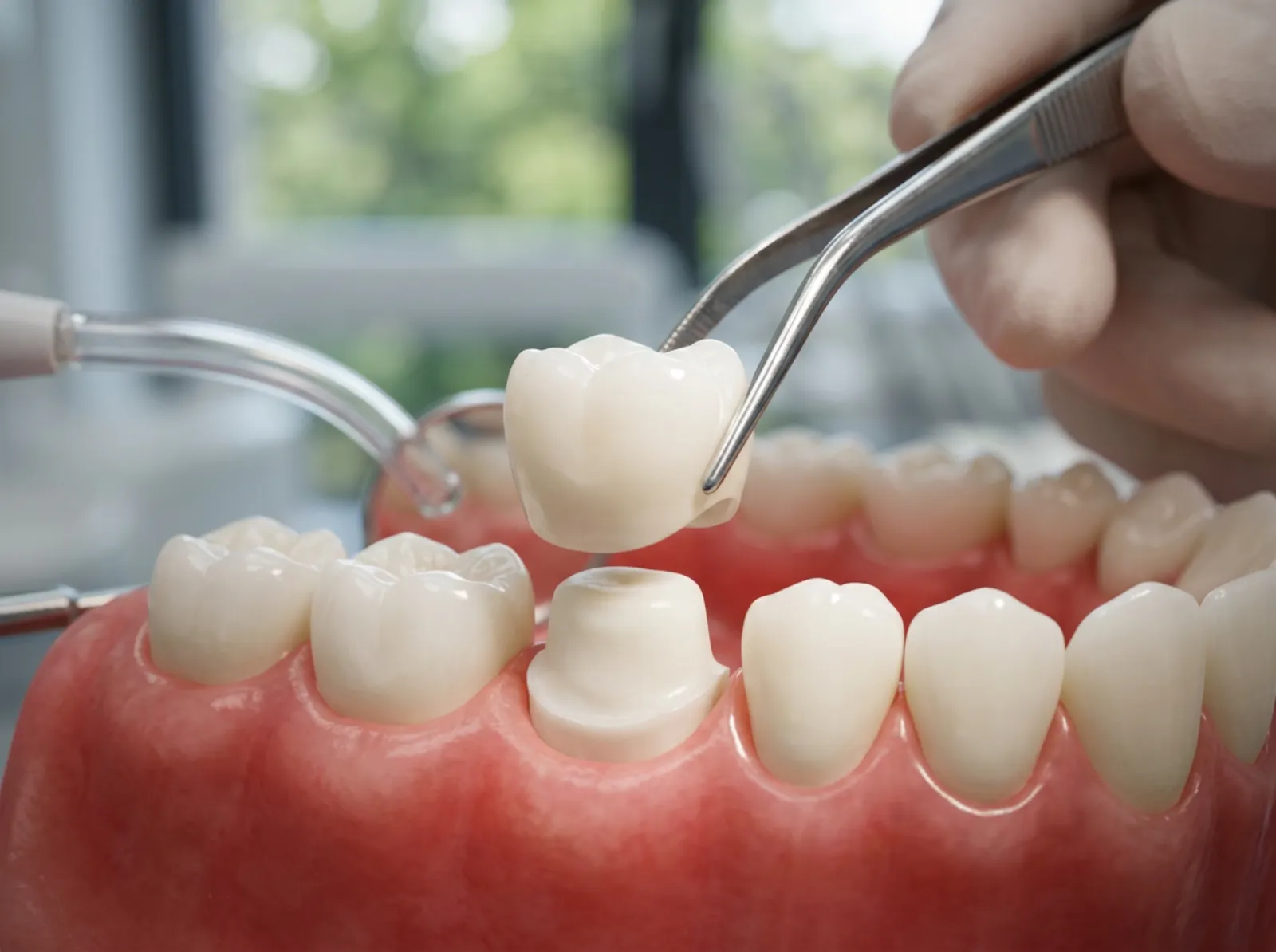
A tooth that’s cracked, heavily filled, or weakened after a root canal often can’t be rebuilt with a simple filling, because there isn’t enough solid tooth left to hold one. A dental crown solves that by capping the entire tooth in a custom-made shell that restores its strength and shape. A bridge does something different: it fills the gap left by a missing tooth. At Mount Lehman Dental in West Abbotsford, Dr. Aman Kalucha designs crowns and bridges that fit your bite precisely, so the repaired tooth feels like part of your mouth again rather than a patch.
When you actually need a crown
A filling replaces a small amount of lost tooth structure. A crown is the right choice when too much of the tooth is gone for a filling to be reliable. The most common reasons include:
- A cracked or fractured tooth, where a filling would only act as a wedge and risk splitting it further.
- A tooth after root canal treatment, which becomes brittle once the nerve and blood supply are removed and needs full coverage to avoid fracturing. If you’ve had, or are facing, a root canal, a crown is usually the final step.
- A large old filling that keeps failing or has decay forming around its edges.
- A worn-down tooth from grinding, or a tooth being used to anchor a bridge.
The goal is always to keep your natural tooth working. A crown is a way to save a tooth, not replace it.
When a bridge makes sense
A bridge replaces one or more missing teeth in a row. It’s made of crowns on the teeth on either side of the gap, called abutments, joined to one or more false teeth, called pontics, that fill the space. The whole unit is cemented in place, so unlike a partial denture it doesn’t come out.
A bridge restores your ability to chew evenly, keeps the neighbouring teeth from drifting into the gap, and supports the way your lips and cheeks sit. It’s a fixed, relatively fast solution when the teeth beside the gap are healthy enough to carry it.
The materials, and why they matter
Not every crown should be made of the same thing, and the material affects both how it looks and how long it lasts.
- All-ceramic and zirconia crowns are the modern standard for front teeth and visible areas because they’re tooth-coloured and translucent like enamel. Zirconia is also exceptionally strong, which makes it a good choice for back molars that take heavy chewing force.
- Porcelain-fused-to-metal (PFM) has a metal core under a porcelain coating: strong and time-tested, though a thin grey line can show at the gum over the years.
- Gold and metal alloys are the gentlest on the opposing teeth and almost never chip, but the colour rules them out for most visible teeth. They still have a place on out-of-sight molars for patients who grind.
Dr. Kalucha recommends the material based on where the tooth sits, how hard you bite, and how it will look, not a one-size default. For front teeth, the same shade-matching judgment used in cosmetic dentistry goes into getting a crown to blend in among your natural teeth.
What the two visits involve
A traditional crown or bridge takes two appointments, usually a couple of weeks apart.
- First visit: shaping and impression. The tooth is numbed and reshaped to make room for the crown. Dr. Kalucha then takes a detailed impression or digital scan and selects the shade. You leave wearing a temporary crown that protects the tooth while the permanent one is made.
- Between visits. A dental lab fabricates your crown to the exact specifications. This is where the careful fit and colour matching happen.
- Second visit: fitting and bonding. The temporary comes off, the new crown is checked for fit, colour, and bite, adjusted if needed, and then permanently cemented. You walk out chewing on it.
A bridge follows the same pattern; the abutment teeth are shaped at the first visit and the finished bridge is bonded at the second.
Crown vs. bridge vs. implant: an honest comparison
People often ask which option is “best.” The honest answer is that they solve different problems.
- A crown saves a tooth you still have. If the root is healthy, this is almost always the goal.
- A bridge replaces a missing tooth without surgery and is usually completed in a few weeks. The trade-off is that two healthy neighbouring teeth must be ground down to hold it, and the bone under the gap continues to shrink over time.
- A dental implant replaces a missing tooth without touching the teeth beside it and preserves the jawbone, because the titanium post acts like a root. It costs more upfront and takes several months, but for many patients it’s the longest-lasting value.
Dr. Kalucha’s hospital-based General Practice Residency at Dalhousie University, an extra year treating complex restorative, surgical, and endodontic cases that most general dentists never complete, is exactly the background that makes this judgment call reliable. He’ll tell you plainly when a tooth is worth crowning and when you’d be better served replacing it.
What it costs in the Abbotsford area
In the Abbotsford market, a single crown generally falls between about $1,100 and $1,800 , and a three-unit bridge between roughly $2,500 and $4,000 , depending on the material and any preparatory work like a core build-up. Rather than quote a vague figure, you get a written estimate after your exam. We’ll review your insurance, bill directly where we can, and explain how the Canadian Dental Care Plan may apply before treatment starts.
Making your crown or bridge last
A crowned tooth can still get decay where the crown meets the gum, and the teeth supporting a bridge need careful cleaning underneath. Brushing twice a day, flossing daily (including under a bridge with a floss threader or water flosser), and keeping your regular checkups are what protect the work over the long run. If you grind your teeth, a nightguard is worth discussing, since it spreads the load that would otherwise crack porcelain.
If you have a tooth that aches when you bite, a filling that keeps breaking, or a gap you’ve been living with, book a visit at our Mt Lehman Road office in West Abbotsford or call 604-856-7860. You’ll leave with a clear, honest plan.
Book crowns & bridges today
Related services
Dental Implants
A permanent, natural-looking way to replace one tooth, several teeth, or anchor a denture, restoring how you bite, chew, and smile.
Root Canal Treatment
A root canal isn't the painful part, the infection is. Dr. Kalucha, hospital-trained in endodontics, removes the source of the pain and saves your natural tooth.
Tooth-Coloured Fillings
Repair a cavity with a mercury-free composite filling matched to your tooth: natural-looking, bonded in place, and usually done in a single visit.
Frequently asked questions
How much does a dental crown cost in Abbotsford?
A single crown in the Abbotsford area generally runs from about $1,100 to $1,800, and a three-unit bridge from roughly $2,500 to $4,000. The range depends on the material chosen and whether the tooth first needs a core build-up or root canal. You get a written estimate after your exam, before any work begins.
Does getting a crown hurt?
No, preparing a tooth for a crown is done under local anesthetic, so you shouldn't feel pain during the appointment. Some tenderness or sensitivity to hot and cold is normal for a few days afterward and usually settles on its own. If you feel anxious, Dr. Kalucha can talk through ways to keep you comfortable.
How long do crowns and bridges last?
With good care, most crowns and bridges last 10 to 15 years, and many last longer. Lifespan depends on your bite, your home cleaning, and habits like grinding or chewing ice. Daily brushing and flossing plus regular checkups are what protect them most.
How many appointments does a crown take?
A traditional crown takes two visits, usually two to three weeks apart. At the first visit the tooth is shaped, an impression is taken, and a temporary crown is fitted; at the second your custom crown is bonded into place. A bridge follows the same two-visit pattern.
Is a crown, bridge, or implant the better choice for me?
It depends on whether the tooth can be saved. A crown restores a tooth that is cracked or heavily filled but still has a healthy root, while a bridge or an implant replaces a tooth that is already gone. A bridge is faster and avoids surgery, but an implant doesn't require grinding down the neighbouring teeth, and Dr. Kalucha will walk you through the trade-offs for your situation.
Does insurance or the CDCP cover crowns and bridges?
Many dental plans cover a portion of crowns and bridges, often around 50 percent up to your annual maximum. The Canadian Dental Care Plan has its own rules for major restorative work, and coverage depends on your eligibility and the year you enrolled. We'll review your benefits, bill directly where possible, and explain any remaining balance before you commit.
Ready to book your visit?
New patients are welcome at our West Abbotsford office. Call us or request an appointment online, and we’ll find a time that works for you.