
Invisalign vs. Braces: Which Is Right for You?
 By Dr. Aman Kalucha
Medically reviewed by Dr. Kalucha, DDS
By Dr. Aman Kalucha
Medically reviewed by Dr. Kalucha, DDS
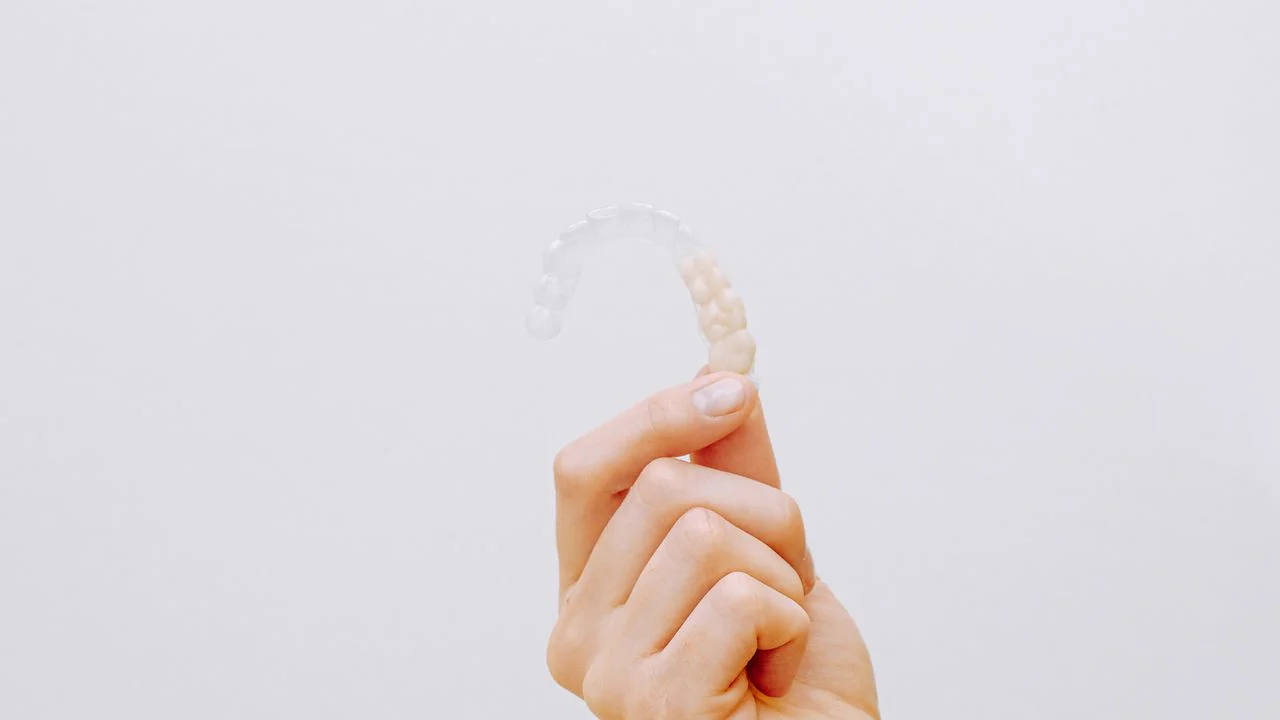
When you’re deciding how to straighten your teeth, the choice almost always comes down to clear aligners like Invisalign versus traditional braces. Both work. Both have moved millions of teeth into better positions. But they don’t feel the same to live with, they don’t cost the same, and (this is the part most articles skip) they aren’t equally good at every kind of correction. I’m Dr. Aman Kalucha, and as a member of the American Academy of Clear Aligners, I treat a lot of patients here in West Abbotsford with Invisalign. I also know when to tell someone braces are the smarter call. Here’s the honest version.
Appearance: where Invisalign wins easily
This is the reason most adults ask about Invisalign in the first place. The aligners are clear, removable trays that sit over your teeth, and from a normal conversational distance most people won’t notice them. Braces are visible metal brackets and wires. Tooth-coloured ceramic brackets soften the look, but they’re still there.
If you’re a teacher, in sales, getting married, or just self-conscious about a “metal mouth” at 35, the visual difference matters. For teenagers, it can cut both ways: some prefer the discretion of aligners, others actually like choosing coloured bands on braces.
Comfort and your daily mouth
Both create soreness when teeth move. That’s the point, and it’s normal for a few days after each adjustment or new tray. The difference is what’s touching your cheeks and tongue.
Braces have brackets and wire ends that can rub and cause ulcers, especially in the first couple of weeks (orthodontic wax helps). Invisalign trays are smooth plastic, so there’s less irritation, though some people find the tray edges or the small tooth-coloured “attachments” we bond on take getting used to. For most patients, aligners feel less intrusive day to day.
Eating and drinking
Invisalign wins here, plainly. You take the trays out to eat, so there’s no food you have to avoid: popcorn, corn on the cob, apples, crusty bread, all fine. With braces, those same foods can snap a bracket or get trapped, and a broken bracket means an extra unplanned visit.
The catch: you must take aligners out for anything other than water, including coffee, juice, and snacking. If you graze all day, that’s a real behaviour change.
Cleaning your teeth
Removable trays make brushing and flossing normal again. You clean your teeth as usual, then clean the trays. Braces require threading floss under wires or using special tools, and people who don’t keep up often finish treatment with white decalcification marks or early gum inflammation around the brackets. During my General Practice Residency at Dalhousie, a competitive extra hospital year most general dentists never do, I treated plenty of the restorative damage that follows poor hygiene during orthodontics, so I take this seriously. If brushing is already a struggle, the easier-to-clean option protects your teeth long term. If you’ll be disciplined about gum health either way, it’s a wash.
Cost in the BC market
Honestly, the two are closer than people expect. In the Fraser Valley, comprehensive Invisalign and full braces both commonly land somewhere around $5,000 to $8,000 , depending on how much movement is needed and how long you’re in treatment. Minor “social six” front-tooth corrections (clear aligners or limited braces) can be considerably less. Braces are sometimes a little cheaper for very complex cases; Invisalign is sometimes cheaper for simple ones.
Insurance treats orthodontics inconsistently, and many adult plans cap or exclude it. Check the orthodontic line on your policy, not just the general dental percentage. You can read more on our insurance and CDCP page. Whatever the plan, you’ll get a written estimate after your exam, before any treatment starts.
Discipline: the factor that decides more cases than you’d think
Here’s what I tell patients straight: Invisalign only works if you wear the trays 20 to 22 hours a day. That leaves roughly two hours for all your meals, drinks, and brushing combined. Take the trays out for a long dinner and a coffee after, and it’s easy to slip under without realizing. Teeth move on the schedule of the plastic that’s actually on them.
Braces don’t ask anything of you. They’re glued on and working whether you cooperate or not. So if you (or your teen) are the type to leave trays in a napkin at a restaurant, braces quietly remove that risk. Be honest with yourself here; it’s the single biggest predictor of whether aligners will go smoothly.
Case complexity: where braces still win
This is the part marketing rarely admits. Clear aligners have come a long way, and for crowding, spacing, mild-to-moderate bite issues, and relapse after old braces, Invisalign handles it well. But braces still have an edge for certain corrections:
- Large vertical movements (intruding or extruding teeth significantly)
- Severe rotations, especially of round-rooted teeth like premolars and canines
- Big bite discrepancies that may need elastics, expansion, or coordination with jaw surgery
- Some cases in young patients whose jaws are still growing
Aligners can do more of this than they used to, sometimes with attachments and refinements, but in the most complex situations braces give the orthodontic team more direct, three-dimensional control. A good clinician should tell you when that applies to you rather than forcing the tool you walked in asking for.
So which is right for you?
Choose Invisalign if appearance matters to you, you want to eat and clean without restrictions, your correction is mild to moderate, and you’re confident you’ll wear the trays. Choose braces if your case is complex, you’d rather not manage a removable appliance, or discipline is a genuine concern.
The only way to know for certain is an exam with X-rays and a look at your bite. If you’re weighing your options in Abbotsford, book a consultation or give us a call. I’ll give you the honest recommendation, not just the popular one.