
Root Canal Treatment in Abbotsford, BC
A root canal isn't the painful part, the infection is. Dr. Kalucha, hospital-trained in endodontics, removes the source of the pain and saves your natural tooth.
Quick answers
Medically reviewed by Dr. Kalucha, DDSDoes a root canal hurt?
No, a modern root canal feels much like getting a filling, because the tooth is fully numbed before any work begins. The pain people associate with root canals is actually the infection or inflammation inside the tooth, and the procedure is what relieves it. Most patients are surprised by how comfortable it is and how much better they feel afterward.
How much does a root canal cost in Abbotsford?
In the BC market a root canal typically runs about $700 to $1,500 depending on the tooth and how many canals it has, with molars at the higher end. A crown afterward is a separate cost. You'll get a written estimate after your exam, and the office bills insurance directly where possible and reviews CDCP coverage with you before treatment.
Why do I need a crown after a root canal?
A root-canal-treated tooth becomes more brittle and prone to cracking, so a crown protects it and restores full chewing strength. This is especially important for back teeth, which take the most bite force. Skipping the crown is one of the most common reasons a treated tooth later fails or fractures beyond repair.
No procedure in dentistry has a worse reputation than the root canal, and almost none of it is deserved. The pain people dread isn’t caused by the treatment. It’s caused by the infected or inflamed nerve inside the tooth, and a root canal is what gets rid of it. If you’ve been putting off a tooth that throbs, aches with hot drinks, or has a tender bump on the gum, the procedure you’re afraid of is the one that will finally make it stop hurting. At Mount Lehman Dental in West Abbotsford, Dr. Aman Kalucha treats root canals with training most general dentists never complete.
”Root canals are painful”: let’s correct the record
The myth comes from a time before modern anesthetics and techniques, when people only got root canals once a tooth was already in agony. Today the experience is very different. Your tooth is thoroughly numbed before anything begins, so the appointment itself feels much like having a filling done. The discomfort you walk in with, the deep, pulsing ache that keeps you up at night, is the infection. Removing it is the relief, not the source.
It helps to know what’s actually happening. Inside every tooth is a soft core called the pulp, made up of nerves and blood vessels. When decay, a crack, or repeated dental work lets bacteria reach the pulp, it becomes inflamed or infected. That’s what generates the pain and, if left alone, an abscess. A root canal removes that damaged pulp, cleans and disinfects the empty canals, and seals them, taking the pain with it while keeping your natural tooth in place.
Why Dr. Kalucha’s training matters here
This is the part of dentistry where the dentist’s background genuinely changes your experience. After earning his DDS from Dalhousie University in Halifax, Dr. Kalucha completed a General Practice Residency (GPR) there, a competitive extra hospital-based year that most general dentists never pursue. During that residency he treated complex restorative, surgical, and endodontic (root canal) cases under specialist supervision.
That matters because root canals aren’t all the same. A front tooth with a single straight canal is straightforward; a molar with three or four narrow, curved canals is a different challenge entirely. The cases that go wrong are usually the ones where a canal is missed or under-cleaned. Having trained on difficult endodontic cases alongside specialists, Dr. Kalucha is comfortable with the anatomy that trips up less-experienced hands, which means more of your treatment can be handled right here in Abbotsford instead of being referred out to a specialist across the Fraser Valley. You can read more about his training and credentials if you want the full picture before you book.
What actually happens during your appointment
Knowing the steps takes a lot of the fear out of it. Here’s the real sequence:
- Numbing. The tooth and surrounding area are fully anesthetized. Nothing starts until you’re completely numb.
- Isolation. A small protective sheet keeps the tooth clean and dry and keeps everything out of the back of your throat.
- Access. A tiny opening is made in the top of the tooth to reach the pulp chamber.
- Cleaning and shaping. The infected pulp is removed, and the canals are cleaned, disinfected, and shaped with fine instruments and rinses.
- Sealing. The canals are filled with a rubber-like material and sealed so bacteria can’t return.
- Temporary closure. The access opening is closed, usually with a temporary filling, until your permanent restoration is placed.
Most teeth are finished in one or two visits of about 60 to 90 minutes. You’ll feel pressure and movement, but not the pain you came in with.
The crown afterward: don’t skip this step
Finishing the root canal is only half the job. A treated tooth loses its internal blood supply and becomes more brittle over time, which makes it prone to cracking, especially molars that grind through years of chewing. A crown caps the tooth, restores its full strength, and seals it against new infection.
This is the single most important thing you can do to protect the work you’ve paid for. Skipping the crown is one of the most common reasons a perfectly good root-canal-treated tooth later splits and has to be pulled. For front teeth a crown isn’t always required, but for back teeth it almost always is, and Dr. Kalucha will tell you plainly what your tooth needs. If a tooth ultimately can’t be saved, you’ll get an honest conversation about replacing it, including dental implants and other options.
If you’re anxious about it
Plenty of people who need a root canal have been quietly avoiding the dentist for exactly this reason. That’s understood here, and there’s no lecture coming. Dr. Kalucha explains each step before he does it, checks in with you throughout, and stops anytime you need a break. If anxiety is a real barrier, mention it when you book so the team can talk through comfort options before the day of treatment, so the fear doesn’t keep you in pain.
What about cost and coverage
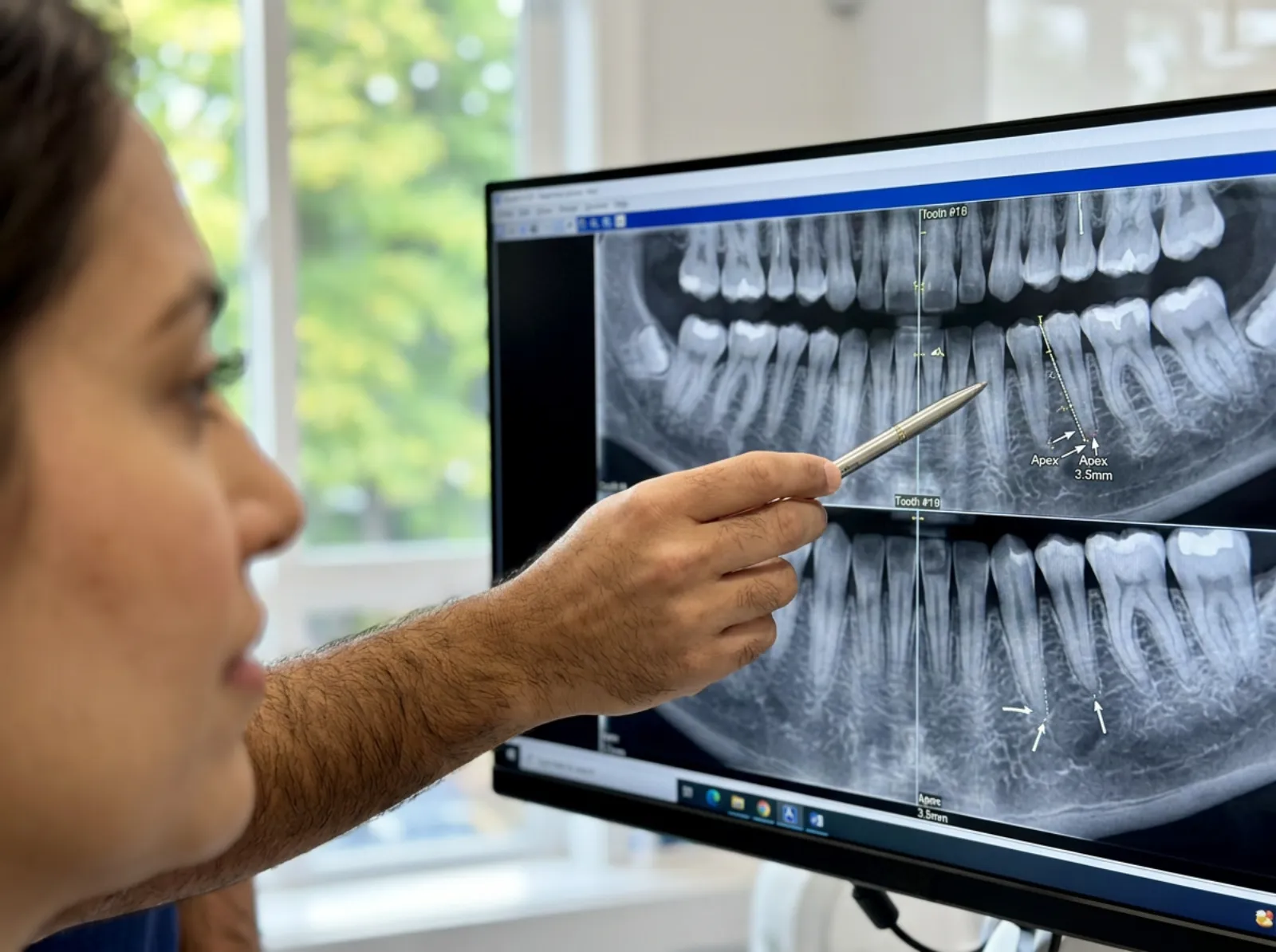
A single-canal front tooth and a four-canal molar are priced very differently, so an exact figure only makes sense once Dr. Kalucha has seen the tooth and any X-rays. As a general guide, root canal treatment in the BC market runs roughly $700 to $1,500 before the crown, which is billed separately. You’ll receive a written estimate after your exam and before any treatment starts. The office bills most insurance plans directly where possible and reviews insurance and CDCP coverage with you, so there are no surprises.
When to call
A root canal isn’t something to schedule for “someday.” Signs the nerve may be involved include lingering pain after hot or cold, pain when biting, a darkening tooth, swelling, or a small pimple-like bump on the gum. Sometimes a tooth needs treatment with no pain at all, caught on X-ray during a routine family dental checkup, which is one more reason regular visits in West Abbotsford pay off. If a tooth is already flaring up, the emergency dentistry page explains how to be seen quickly.
If something doesn’t feel right, call 604-856-7860 or book online. The sooner the tooth is looked at, the more likely it can be saved, and the pain ended.
Book root canal treatment today
Related services
Dental Implants
A permanent, natural-looking way to replace one tooth, several teeth, or anchor a denture, restoring how you bite, chew, and smile.
Emergency Dentistry
In pain or just had an accident? Call us first. We make room for dental emergencies and will walk you through what to do right now.
Crowns & Bridges
Custom crowns to rebuild a damaged tooth and bridges to replace a missing one, restoring strength, function, and the way your bite feels.
Frequently asked questions
Does a root canal hurt?
No, a modern root canal feels much like getting a filling, because the tooth is fully numbed before any work begins. The pain people associate with root canals is actually the infection or inflammation inside the tooth, and the procedure is what relieves it. Most patients are surprised by how comfortable it is and how much better they feel afterward.
How much does a root canal cost in Abbotsford?
In the BC market a root canal typically runs about $700 to $1,500 depending on the tooth and how many canals it has, with molars at the higher end. A crown afterward is a separate cost. You'll get a written estimate after your exam, and the office bills insurance directly where possible and reviews CDCP coverage with you before treatment.
Why do I need a crown after a root canal?
A root-canal-treated tooth becomes more brittle and prone to cracking, so a crown protects it and restores full chewing strength. This is especially important for back teeth, which take the most bite force. Skipping the crown is one of the most common reasons a treated tooth later fails or fractures beyond repair.
How long does root canal treatment take?
Most root canals are completed in one to two appointments of roughly 60 to 90 minutes each. Simpler front teeth often finish in a single visit, while molars with more canals may need two. Dr. Kalucha will tell you what to expect for your specific tooth before he starts.
Is it better to just pull the tooth instead?
Keeping your natural tooth with a root canal is almost always the better long-term choice when the tooth is restorable. Nothing functions quite like your own tooth, and an extraction leaves a gap that usually needs an implant or bridge, which costs more overall. Dr. Kalucha will give you an honest assessment of whether your tooth can be saved.
What happens if I delay treatment?
Delaying lets the infection spread, which can cause an abscess, swelling, bone loss, and eventually loss of the tooth. An infection that started in one tooth can also affect your overall health. If you have throbbing pain, sensitivity to heat, or a pimple-like bump on your gum, call the office at 604-856-7860 sooner rather than later.
Does my insurance or CDCP cover a root canal?
Most dental plans cover a meaningful share of root canal treatment, and the Canadian Dental Care Plan (CDCP) covers endodontic treatment for eligible patients. The exact amount depends on your plan, the tooth involved, and any annual maximum. The office will check your coverage and give you a written estimate before treatment begins.
Ready to book your visit?
New patients are welcome at our West Abbotsford office. Call us or request an appointment online, and we’ll find a time that works for you.