
Porcelain Veneers in Abbotsford, BC
Thin, custom porcelain shells bonded to the front of your teeth to correct chips, stains, gaps, and worn edges: a lasting way to change how your teeth look.
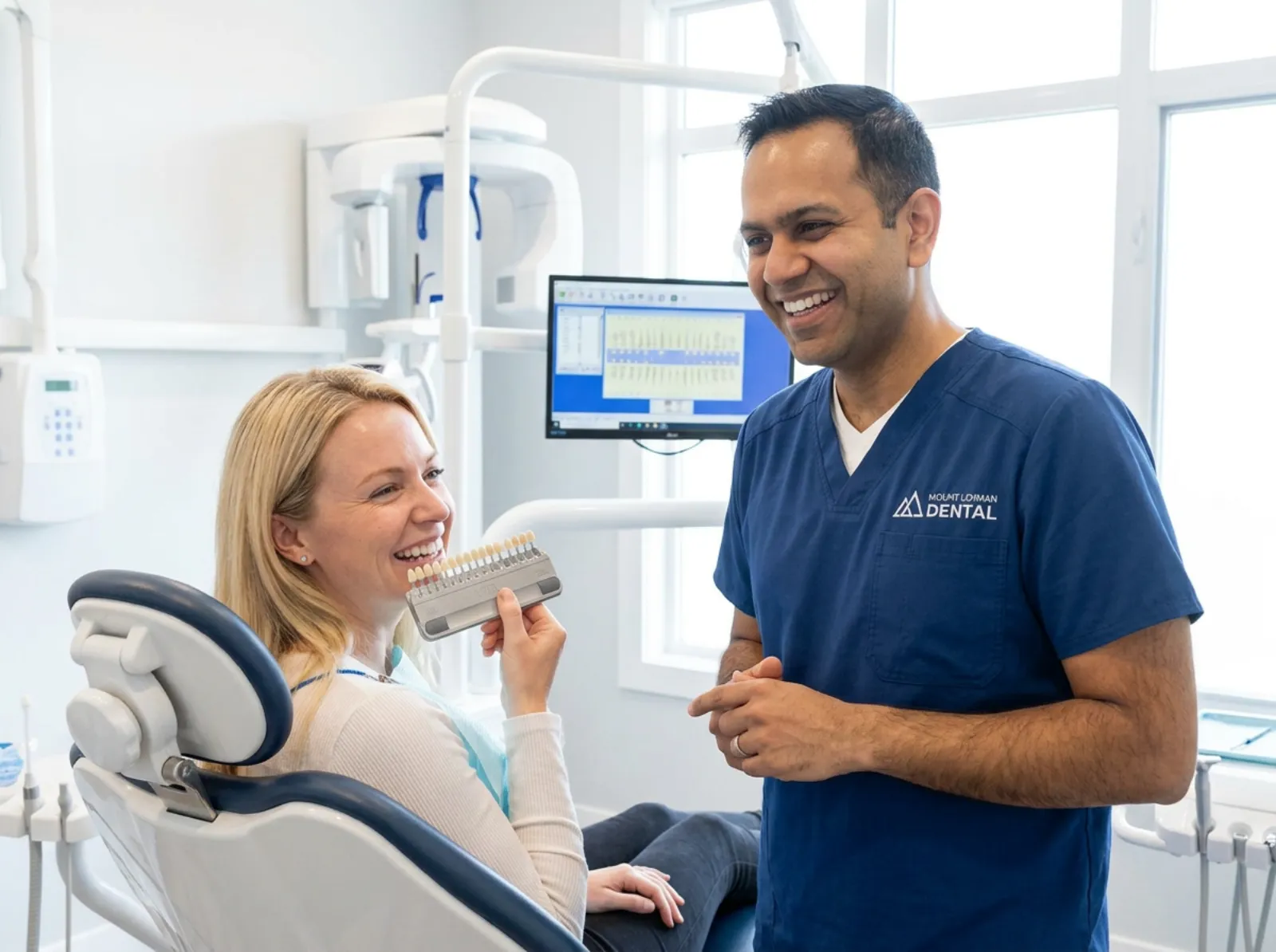
Quick answers
Medically reviewed by Dr. Kalucha, DDSHow much do porcelain veneers cost in Abbotsford?
In the Abbotsford area, porcelain veneers typically run about $1,100 to $2,000 per tooth, so a set of six to eight front teeth often lands somewhere around $7,000 to $16,000. The exact figure depends on how many teeth you treat and the lab work involved. You'll get a written estimate after your exam, before any treatment begins, and most dental plans treat veneers as cosmetic and don't cover them.
Do veneers hurt?
Getting veneers is not a painful procedure for most people. A small amount of enamel is removed under local anesthetic so you don't feel it, and any sensitivity afterward is usually mild and short-lived. If dental anxiety is a concern, tell Dr. Kalucha at your consultation so the visit can be planned around your comfort.
How long do porcelain veneers last?
Porcelain veneers commonly last 10 to 15 years, and many last longer with good care. Their lifespan depends on your habits: avoiding chewing ice or hard objects, wearing a nightguard if you grind, and keeping up with cleanings all help. When a veneer eventually needs replacing, the old one is removed and a new one is made.
If a few front teeth let down the rest of your smile (a chip that catches your eye in every photo, deep stains that won’t lift with whitening, a gap or a worn edge), porcelain veneers can correct all of it at once. Veneers are thin, custom-made shells of porcelain bonded to the front of your teeth, changing their colour, shape, and proportion without rebuilding the whole tooth. At Mount Lehman Dental in West Abbotsford, Dr. Aman Kalucha plans and places veneers with a deliberately conservative approach: keep as much of your own tooth as possible, and make the result look like teeth, not veneers.
What porcelain veneers are
A veneer is a wafer-thin layer of dental porcelain, often less than a millimetre thick, bonded to the visible surface of a front tooth. Think of it as a facing that covers what shows when you smile and talk, while the back and roots of your tooth stay your own.
Porcelain is used for a specific reason: it handles light the way natural enamel does. Real teeth aren’t a flat, opaque white. They’re slightly translucent, picking up and scattering light through the surface. Porcelain mimics that, which is why a well-made veneer doesn’t read as artificial. The shade, shape, and even the small surface texture are chosen to fit your face and blend with your neighbouring teeth.
Who veneers are a good fit for
Veneers solve cosmetic problems on the front teeth that are otherwise hard to fix. You may be a good candidate if you have:
- Stains that won’t whiten, including grey discoloration from old trauma or certain medications, which bleaching can’t touch
- Chips and worn edges from grinding, age, or an old injury
- Small gaps between front teeth you’d rather close without orthodontics
- Teeth that are slightly small, uneven, or misshapen relative to the rest
- Minor crowding or rotation where the teeth are mostly straight but not quite even
Veneers are not the answer for everything, and Dr. Kalucha will say so. Significant crowding is usually better corrected by moving the teeth with Invisalign than by masking them. A tooth with a large filling or a root canal often needs the full coverage of a crown, not a veneer. And healthy gums and enough sound enamel to bond to are prerequisites. Active gum disease or untreated decay is addressed first.
The process, step by step
- Consultation and design. Your teeth and gums are examined, photos are taken, and you talk through exactly what you want to change. This is where the look is decided (shade, length, shape), so you’re not guessing later.
- Preparation. A very thin layer of enamel is removed from the front of the teeth being treated, under local anesthetic, so the veneers sit flush rather than bulky. In conservative cases this can be minimal.
- Impression or digital scan. The exact shape of your prepared teeth is captured and sent to the lab that crafts your veneers. Temporary veneers protect the teeth in the meantime.
- Bonding. At your second visit, each veneer is checked for fit and colour, then permanently bonded to the tooth. Small adjustments to the bite are made before you leave.
Most cases take two appointments a couple of weeks apart. Dr. Kalucha earned his DDS from Dalhousie University and completed a hospital-based General Practice Residency there, a competitive extra year of advanced restorative training that most general dentists never do. That background matters with veneers, because the result depends as much on careful tooth preparation and bite management as on the porcelain itself.
How long veneers last
With good care, porcelain veneers commonly last 10 to 15 years, and often longer. They resist staining far better than natural enamel or bonding, so they tend to hold their colour. What shortens their life is mechanical stress: biting ice or pens, grinding your teeth at night without a nightguard, or using your front teeth as tools. Looking after veneers is otherwise ordinary: brush, floss, and keep up with regular cleanings so the gum line and the tooth beneath stay healthy.
Veneers compared to bonding
Both improve how a front tooth looks, but they’re different tools.
Material and method. Bonding uses tooth-coloured composite resin sculpted directly onto the tooth and hardened in a single visit. Veneers are porcelain, made in a lab and bonded on later.
Tooth structure. Bonding usually removes little or no enamel and is largely reversible. Veneers require removing a thin layer of enamel, which doesn’t grow back, so a veneered tooth will always need a veneer or crown.
Appearance and staining. Porcelain resists coffee, tea, and wine stains and reflects light more naturally over time. Composite can stain and dull within a few years.
Lifespan and cost. Bonding costs less up front but typically lasts a few years before it needs refreshing. Veneers cost more but last far longer per repair.
For a single small chip, bonding is often the smarter, more conservative choice. For multiple teeth or a fuller change you want to keep for years, veneers usually win. Dr. Kalucha will lay out both honestly for your situation.
What veneers cost in Abbotsford
In the Abbotsford market, porcelain veneers generally run about $1,100 to $2,000 per tooth , so treating the six to eight teeth that typically show when you smile can land roughly between $7,000 and $16,000 . Veneers are considered cosmetic, so dental plans usually don’t contribute, and the federal CDCP does not cover cosmetic work. After your exam you’ll receive a written estimate before anything begins, and a payment plan can be discussed. If brightening your teeth is really the goal, it’s worth asking about teeth whitening first. It’s far less invasive and may be all you need.
If you’re weighing whether veneers are right for you, book a consultation at the West Abbotsford office or call 604-856-7860, and Dr. Kalucha will give you a straight, no-pressure assessment of your options.
Book porcelain veneers today
Related services
Cosmetic Dentistry
From whitening to veneers, cosmetic dentistry improves how your teeth look while keeping them healthy, planned around your face, your bite, and what you actually want changed.
Teeth Whitening
Brighten your teeth safely with dentist-supervised whitening, for stronger, more even, and longer-lasting results than any drugstore strip can give you.
Composite Bonding
Repair chips, close small gaps, and reshape teeth in a single visit with tooth-coloured resin: no drilling of healthy tooth, no lab wait, and a fraction of the cost of veneers.
Frequently asked questions
How much do porcelain veneers cost in Abbotsford?
In the Abbotsford area, porcelain veneers typically run about $1,100 to $2,000 per tooth, so a set of six to eight front teeth often lands somewhere around $7,000 to $16,000. The exact figure depends on how many teeth you treat and the lab work involved. You'll get a written estimate after your exam, before any treatment begins, and most dental plans treat veneers as cosmetic and don't cover them.
Do veneers hurt?
Getting veneers is not a painful procedure for most people. A small amount of enamel is removed under local anesthetic so you don't feel it, and any sensitivity afterward is usually mild and short-lived. If dental anxiety is a concern, tell Dr. Kalucha at your consultation so the visit can be planned around your comfort.
How long do porcelain veneers last?
Porcelain veneers commonly last 10 to 15 years, and many last longer with good care. Their lifespan depends on your habits: avoiding chewing ice or hard objects, wearing a nightguard if you grind, and keeping up with cleanings all help. When a veneer eventually needs replacing, the old one is removed and a new one is made.
Are veneers permanent?
Veneers are considered a permanent treatment because the small amount of enamel removed to fit them does not grow back. That means a tooth with a veneer will always need a veneer or crown to cover it. This is why Dr. Kalucha removes as little enamel as possible and will tell you honestly if a more conservative option like bonding would serve you better.
What's the difference between veneers and bonding?
Veneers are custom porcelain shells made in a lab, while bonding is tooth-coloured resin sculpted directly onto your tooth in one visit. Bonding costs less and removes little or no enamel, but it stains more easily and lasts a few years rather than a decade-plus. Veneers cost more and are less reversible, but they resist staining and look more natural over time.
Will my veneers look fake?
Done well, porcelain veneers look like natural teeth rather than a uniform white wall. Porcelain reflects light much like real enamel, and the shade, shape, and translucency are chosen to suit your face and your other teeth. Dr. Kalucha plans the look with you beforehand so there are no surprises when they're bonded on.
Can I whiten my teeth before getting veneers?
Yes, and it's usually the right order to do things. Because porcelain veneers don't respond to whitening, any teeth-whitening you want should happen first so your veneers can be matched to your brighter natural shade. You'll talk through the sequence at your consultation so everything ends up the colour you want.
Ready to book your visit?
New patients are welcome at our West Abbotsford office. Call us or request an appointment online, and we’ll find a time that works for you.